
Menu
Flaura Insights
Operations

Save Life — When Every Second is a Masterpiece of Logic

In healthcare, the "Golden Hour" is the thin line between a recovery and a tragedy. We explore the high-stakes story of Joe, a high-performer who ignored his symptoms until he found a "serving partner" he could trust. Discover how Flaura’s uncompromising engineering and zero-lag architecture eliminate the "bureaucratic weeds" of traditional EMRs, ensuring that when a life is on the line, the system is already prepared to meet the patient at the door.

Share this
Key Takeaways
  • Optimized for rapid clinical decision making.
  • Evidence-based operational improvements.
  • Secure, compliant implementation advice.
Back to Insights Save Life — When Every Second is a Masterpiece of Logic cover


Target Audience: Clinical Leads, Doctors, and Healthcare Visionaries

Data saves lives. But data trapped in a slow, fragmented system is a silent threat. In the medical world, we often talk about the "Golden Hour"—that critical window where the right intervention makes the difference between a recovery and a tragedy.

To understand the impact of Flaura’s engineering, we must look at the story of Joe.

The Office Light that Stayed On

It was 8:00 PM. Joe was alone in his office, fine-tuning a presentation for the board meeting the next morning. Then, the "funny" feeling started. A slight numbness, a strange pressure.

Like many high-performers, Joe hesitated. He didn't want to "waste time" in a hospital waiting room, navigating the bureaucracy of paper forms and redundant questions while his career was on the line. He turned to AI for a quick check. The response was immediate and chilling: Seek medical attention now. You are showing signs of a cardiac event.

The Confidence of a Connected Ecosystem

Joe still hesitated—until he remembered a local clinic powered by Flaura. He knew their reputation: they weren't just a clinic; they were a high-fidelity "serving partner." He checked his phone, saw their availability, and felt a surge of confidence. This wasn't going to be a "bureaucratic black hole." This was a system designed for speed.

He grabbed his keys.

The "Zero-Lag" Arrival

The moment Joe walked through the doors, the "Software Valley" logic went to work. Because the clinic utilized a unified, modular backbone, they were already prepared. There was no frantic searching for files or re-asking for his history.

Joe was moved from the door to a diagnostic suite in minutes. The "telemetry" of his vitals flowed directly into the hands of the specialist. The diagnosis was swift: Joe was in the early stages of a stroke.

The Hour that Changed Everything

Later, as Joe recovered, his physician was blunt: "If you had stayed at that desk for one more hour to finish that presentation, you wouldn't have made it to the meeting. You would have been too late."

Joe’s life was saved by two things: his decision to move, and a clinical system that was engineered to meet him at the door.


Why "Save Life" is an Engineering Standard

Joe’s story isn't just about medicine; it’s about interoperability and responsiveness.

  • Eliminating the Bureaucracy Gap: In many clinics, the "weeds" of manual data entry create a 20-minute delay before a patient even sees a doctor. Flaura’s architecture trims that to seconds.

  • Clinical Alerts in Real-Time: Our system doesn't just store data; it listens to it. High-risk signals are flagged instantly, ensuring that a "funny feeling" is treated with the urgency it deserves.

  • The Purity of History: When a patient like Joe arrives, the provider has instant access to his comprehensive history through secure, standardized data sharing. No guesswork, just precision.

In the Software Valley, we believe that professional, high-scale software can be poetic in its logic and life-saving in its execution. We don't just build code; we build the garden where Joe—and thousands like him—can continue to bloom.


Talk Through Enterprise Rollout Options

Connect with our team to discuss multi-site deployment, governance, and the commercial path that fits your organization.

See how Flaura speeds up clinical intake

F
Flaura

Enterprise Healthcare Technology

Writing about clinical workflows, regulatory compliance, and resilient software architecture for modern healthcare delivery.

Read Next

The Consent Bridge: Navigating the Privacy Paradox and Adolescent Autonomy

In 2026, navigating patient consent means balancing privacy, autonomy, and usability. While most patients claim to value privacy, many still choose insecure communication methods when secure portals are too complex—a contradiction known as the Privacy Paradox. For adolescents, the stakes are even higher: over 55% hesitate to share sensitive health info if parents have full portal access. Modern systems like Flaura address this with granular consent, segmented records, and automatic proxy revocation. True consent isn’t just compliance—it’s empowerment, transparency, and trust. Clinics must design workflows that protect vulnerable patients without adding friction.

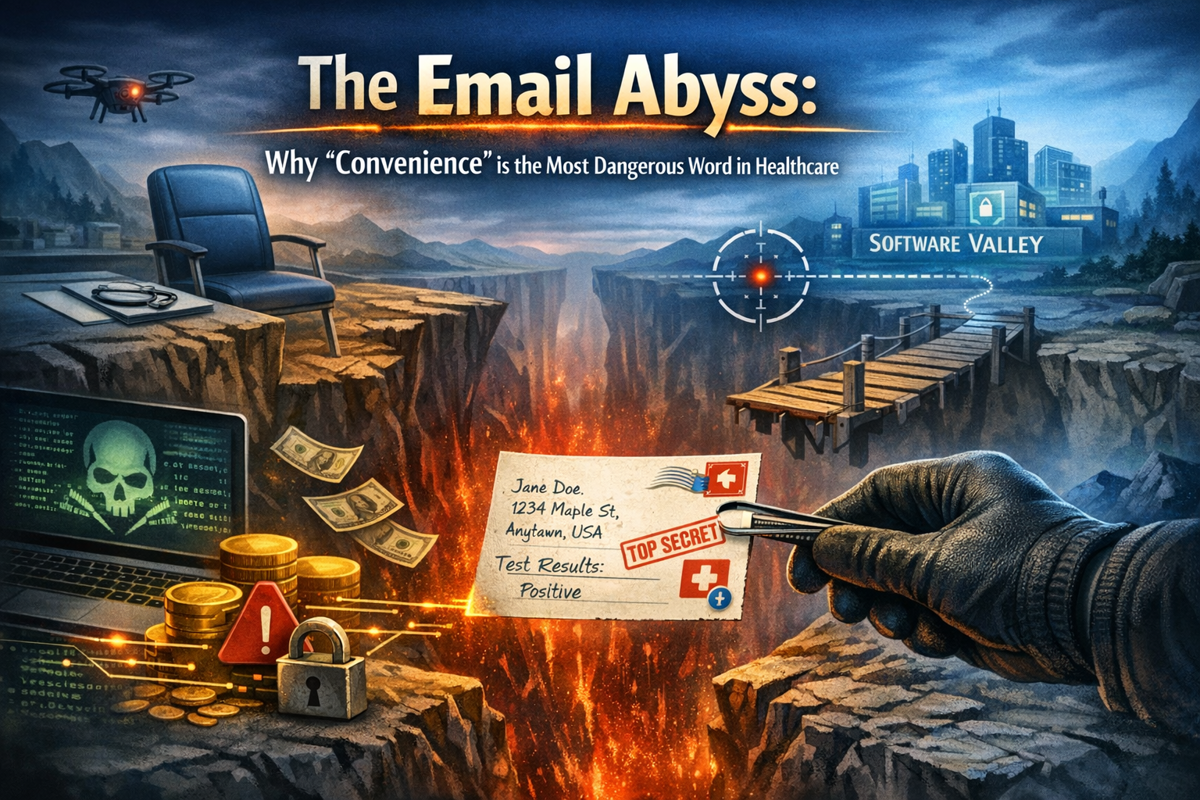
The Email Abyss: Why "Convenience" is the Most Dangerous Word in Healthcare

In the “Software Valley,” standard email looks like a convenient shortcut—but in healthcare it’s a dangerous abyss. Unencrypted emails are vulnerable to adversary-in-the-middle attacks, spoofing, and accidental misdelivery, leaving Protected Health Information exposed. Regulations like HIPAA, GDPR, and Zimbabwe’s Data Protection Act demand Business Associate Agreements and rapid breach reporting, yet consumer email providers rarely comply. Even small errors, like autocomplete mistakes, can trigger costly breaches and erode patient trust. With average breach costs exceeding $4.7 million, clinics cannot afford the risk. Flaura offers a secure portal pathway with zero-knowledge encryption, audit logs, and identity verification—bridging convenience and compliance while protecting both patients and reputation.

The Cost of the Empty Chair: Why Appointment No-Shows are Costing Your Clinic Thousands

Missed appointments may look minor, but for clinics they represent a hidden drain on revenue. With no-show rates averaging 5–10% and climbing to 20–30% in some specialties, the financial impact is staggering—up to $52,000 annually for a small practice, and billions across healthcare. Manual reminder calls are inconsistent and create friction, leaving patients less likely to reschedule. Automated, bidirectional reminders via text, email, or portal reduce no-shows by 30–40%, recovering hundreds of appointments each year. Flaura’s secure digital front door empowers patients to manage scheduling easily, reduces staff burden, and ensures every clinical hour is used effectively. For clinic owners, the ROI is clear: automation pays for itself quickly while protecting both revenue and patient trust.