
Secure Clinical Communication Beyond Email: Building Trust in the Software Valley
In the evolving landscape of healthcare, communication is no longer just about exchanging information. It’s about trust, compliance, and continuity of care. In 2026, clinics that rely on outdated tools like standard email are not only risking patient privacy—they are risking their reputation, revenue, and regulatory standing.
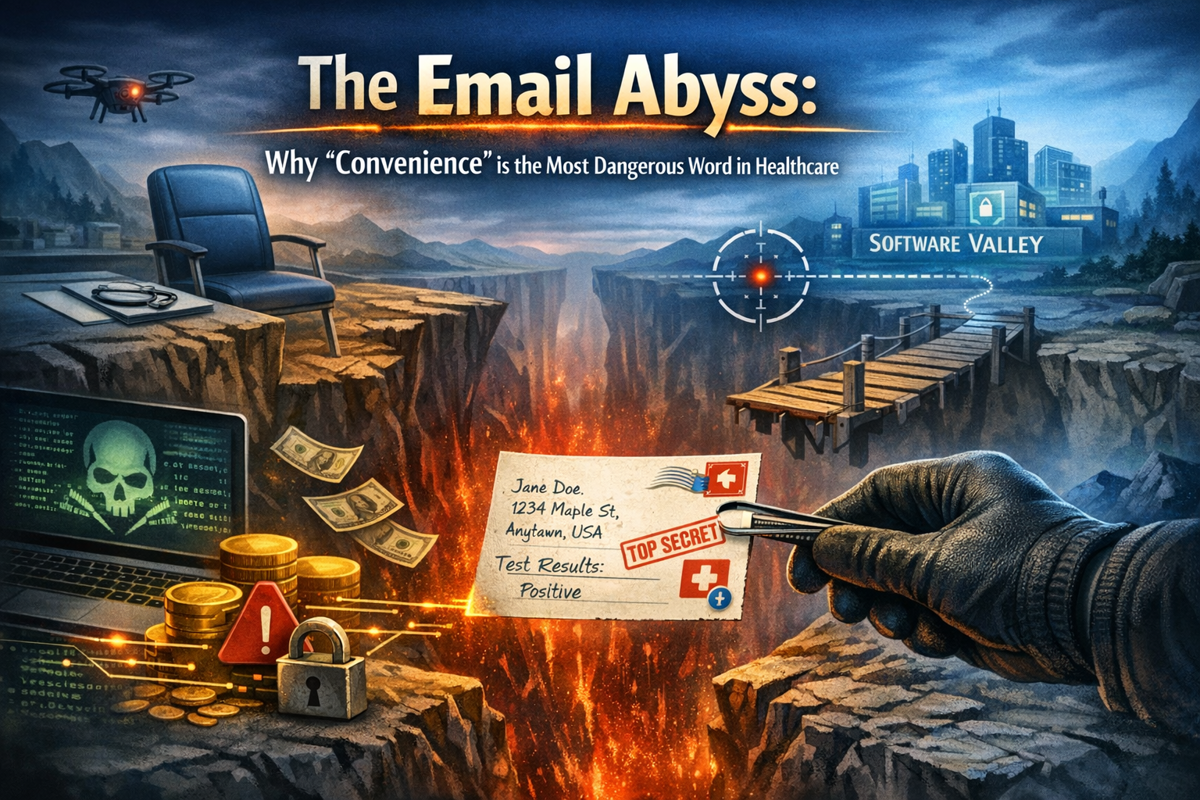
Welcome to Software Valley, where every path represents a choice in how clinics engage with patients. Some paths are shortcuts, tempting but dangerous. Others are bridges—secure, compliant, and future-ready. This guide is your map.
1. The Essence of Secure Dialogue
Healthcare communication is not casual conversation. It carries Protected Health Information (PHI), which demands encryption, authentication, and auditability.
· The Risk of Email: Like postcards, unencrypted emails can be intercepted, misdelivered, or stored indefinitely.
· The Secure Portal Pathway: Patient portals and encrypted messaging systems ensure that sensitive information is delivered only to the right person, at the right time, with full audit trails.
2. The Compliance Imperative
Regulators worldwide are tightening their grip on digital health communication.
· HIPAA & GDPR: Require Business Associate Agreements (BAAs) and strict breach reporting timelines.
· Zimbabwe’s Data Protection Act: Reinforces accountability for every vendor handling patient data.
· The Cost of Non-Compliance: Breaches can exceed $4.7 million in fines, legal fees, and lost reputation.
Compliance is not optional—it’s the foundation of sustainable practice.
3. The Portal-First Philosophy
Convenience should never come at the cost of security. A Portal-First approach balances both:
· Zero-Knowledge Encryption: Protects data at rest and in transit.
· Identity Verification: Ensures the right patient receives the right message.
· Audit Logs: Provide transparency for regulators and peace of mind for clinics.
This philosophy transforms communication from a liability into a strategic asset.
4. The Business Case: Protecting Revenue
Secure communication isn’t just about compliance—it’s about financial sustainability.
· No-Show Reduction: Automated reminders reduce missed appointments by 30–40%, recovering thousands in lost revenue.
· Admin Efficiency: Staff spend less time chasing patients and more time on care.
· Patient Empowerment: Portals give patients control, reducing friction and building loyalty.
Every secure message is a step toward optimized schedules and healthier margins.
5. The Human Factor: Trust and Engagement
Patients judge clinics not only by medical outcomes but by how their information is handled.
· Trust: Secure communication signals respect for privacy.
· Engagement: Portals foster continuous dialogue, not episodic contact.
· Reputation: Clinics that prioritize security attract patients who value professionalism and care.
Trust is fragile—once broken, it is costly to rebuild.
6. Crossing the Valley with Flaura
At Flaura, we build bridges across the Software Valley:
· Secure Messaging: Encrypted, auditable, and compliant.
· Automated Reminders: Reduce no-shows and protect revenue.
· Patient Portals: Empower patients while safeguarding data.
We believe clinics shouldn’t have to choose between convenience and compliance. With Flaura, you get both.
Conclusion: The Future-Ready Clinic
The journey through Software Valley is about choices. Will you risk the abyss of insecure email, or build a secure, compliant, and patient-centered pathway?
Secure communication is not a luxury—it’s the infrastructure of modern healthcare.
Explore our cluster articles to see how secure communication impacts every dimension of your clinic: revenue, compliance, patient trust, and ethics.
· [The Cost of the Empty Chair: Why Appointment No-Shows Are Costing Your Clinic Thousands]
· [The Email Abyss: Why “Convenience” Is the Most Dangerous Word in Healthcare]
· [The Ethics of Consent: Why Patient Permission Is the New Currency]